The Anchorage food scene is vibrant, diverse, and highly competitive. From cozy cafes in Spenard to bustling seafood spots Downtown, local restaurant owners pour their hearts into delivering incredible food and hospitality. Yet, when it comes to their digital presence, many establishments make a critical, revenue-killing mistake: they rely entirely on a Facebook page.
It’s easy to understand why. Setting up a Facebook or Instagram account is free, takes five minutes, and lets you post a photo of today’s halibut special instantly. But treating social media as a substitute for a professional website is like running your restaurant out of a borrowed kitchen—you don’t own the space, you have zero control over the rules, and you can be locked out at any moment.
If you want to capture the attention of hungry locals on a Tuesday night in January, as well as the massive influx of summer tourists searching for the “best places to eat near me,” a Facebook page isn’t enough. Here is why your Anchorage restaurant needs a dedicated, professional website to thrive.
The “Facebook-Only” Trap for Eateries
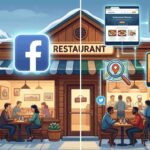
Social media is a fantastic marketing tool, but it is a terrible foundational hub for your business. Over the last decade, Facebook’s organic reach for business pages has plummeted. When you post an update, only a tiny fraction of your followers actually see it unless you pay to “boost” the post.
Furthermore, you are entirely at the mercy of their algorithm. If Facebook experiences an outage, changes its layout, or mistakenly flags your account, your restaurant effectively disappears from the internet. You wouldn’t let a third party dictate how you run your dining room; you shouldn’t let them dictate your digital real estate.
5 Reasons Your Anchorage Restaurant Needs a Website
Moving beyond social media and investing in professional Anchorage website design and branding is the single best way to legitimize your eatery and drive consistent foot traffic. Here is why.
1. You Own Your Digital Real Estate (and Your Data)
Your website belongs to you. It is a permanent digital asset where you control the branding, the message, and the user experience from top to bottom. More importantly, you own the data.
With a website integrated with Google Analytics 4, you can see exactly how people are finding you, what menu items they are looking at most, and whether they are locals or out-of-state visitors planning their summer RV trip.
2. Dominating Local SEO and Google Search
When a tourist gets off a cruise ship or steps out of their hotel in Midtown Anchorage, they don’t open Facebook to find dinner. They open Google and type “Best seafood near me,” “Anchorage breweries,” or “Places to eat open late.”
Facebook pages rarely rank well for these specific, high-intent local searches. To show up at the exact moment someone is hungry and looking for options, you need a website optimized for Local SEO. Search engines scan your website for keywords, location data, and structured menus to determine if you are the best answer to a user’s search. As AI search features like Generative Engine Optimization (GEO) become the norm, having a text-rich, easily readable website is non-negotiable.
3. A Superior, Mobile-Friendly Menu Experience
We have all been there: you click on a restaurant’s Facebook page, navigate to their “Photos” tab, and try to pinch and zoom on a blurry, poorly lit photograph of a physical menu to see the prices. It’s a frustrating user experience that drives potential customers away.
A dedicated website allows you to host a responsive, text-based HTML menu.
- It’s readable: It automatically scales to fit beautifully on any smartphone screen.
- It’s searchable: Search engines can read the text, meaning if someone Googles “reindeer sausage Anchorage,” your menu can actually trigger your website to rank.
- It’s updatable: You can change prices or swap out seasonal items in seconds, without having to upload a new batch of photos.
4. Direct Online Ordering and Reservations
Third-party delivery apps like DoorDash and UberEats take a massive chunk of your profits—sometimes up to 30% per order. While they offer convenience, pushing all your customers through these platforms severely hurts your bottom line.
A custom website allows you to integrate direct online ordering and reservation systems (like Toast, Square, or OpenTable). When a customer orders directly through your site, you keep the profits, you keep their contact information for future marketing, and you own the customer relationship.
5. Building Real Brand Credibility
Let’s be honest: in 2026, a business without a website looks less credible. Diners want to get a vibe for your restaurant before they commit to spending their money there. A well-designed website acts as your virtual host. It showcases high-quality photography of your interior, tells the story of your chef or local Alaskan sourcing, and sets the expectations for the dining experience in a way a generic Facebook template simply cannot.
Comparing the Customer Experience
Here is a quick breakdown of how a custom website outperforms a social media page for your most important customer interactions.
| Feature | Facebook Page | Custom Website |
|---|---|---|
| Menu Viewing | Often blurry photos; hard to read on mobile. | Clean, mobile-responsive text; easily updated. |
| Search Engine Ranking | Poor. Relies on users already knowing your name. | Excellent. Captures “near me” and category searches. |
| Online Ordering | Pushes users to high-fee 3rd-party apps. | Direct integration; you keep the profits and data. |
| Brand Control | Stuck in Facebook’s template; distracted by ads. | 100% custom colors, fonts, layout, and storytelling. |
How Your Website Fuels Your Google Business Profile
Your Google Business Profile (GBP) is the listing that appears on Google Maps when someone searches for you. While highly valuable, your GBP needs a strong website to back it up.
Google uses the information on your website to verify the details on your Maps listing. Furthermore, having a link to a fast, informative website directly on your GBP dramatically increases the chances that a searcher will convert into a seated diner. For more strategies on dominating the map pack, read our guide on ways to improve local search results and attract new customers.
Frequently Asked Questions (FAQs)
Should I delete my restaurant’s Facebook page once I get a website?
Absolutely not! Social media and web design work together. Use Facebook and Instagram for top-of-funnel marketing—sharing daily specials, behind-the-scenes photos, and engaging with the community. Then, use those posts to drive traffic to your website, where the actual conversion (viewing the menu, making a reservation, or ordering online) happens.
How much does a restaurant website cost in Anchorage?
The cost varies depending on functionality. A simple, beautiful site with a menu and contact form is highly affordable. Adding complex integrations like direct POS ordering or custom reservation systems will increase the initial investment, but the money saved on third-party app fees usually yields a rapid return on investment.
Can I just use a free website builder like Wix or Squarespace?
You can, but DIY builders often suffer from slow load times, poor mobile optimization, and limited SEO capabilities. The restaurant industry is too competitive to rely on a cookie-cutter template. A professionally designed site ensures you rank higher, load faster, and look better than the competition.
How do I get my menu to show up directly in Google search results?
This is achieved by using a text-based menu on your website and implementing “Restaurant Schema” (a type of structured data code). This tells Google exactly what your menu items are, allowing them to display your dishes directly in the search results. A professional web designer can handle this technical setup for you.
Ready to Give Your Restaurant the Digital Presence It Deserves?
Your food is incredible, your staff is welcoming, and your dining room is ready. It is time your online presence reflected the true quality of your Anchorage restaurant.
Relying solely on a Facebook page leaves your business vulnerable and invisible to thousands of potential customers searching Google every day. At Bianca Frank Design, we specialize in building fast, beautiful, and highly functional websites that turn online searchers into in-house diners.
Stop losing hungry customers to the competition. Contact us today to schedule a consultation and let’s build a website that works just as hard as your kitchen staff.